

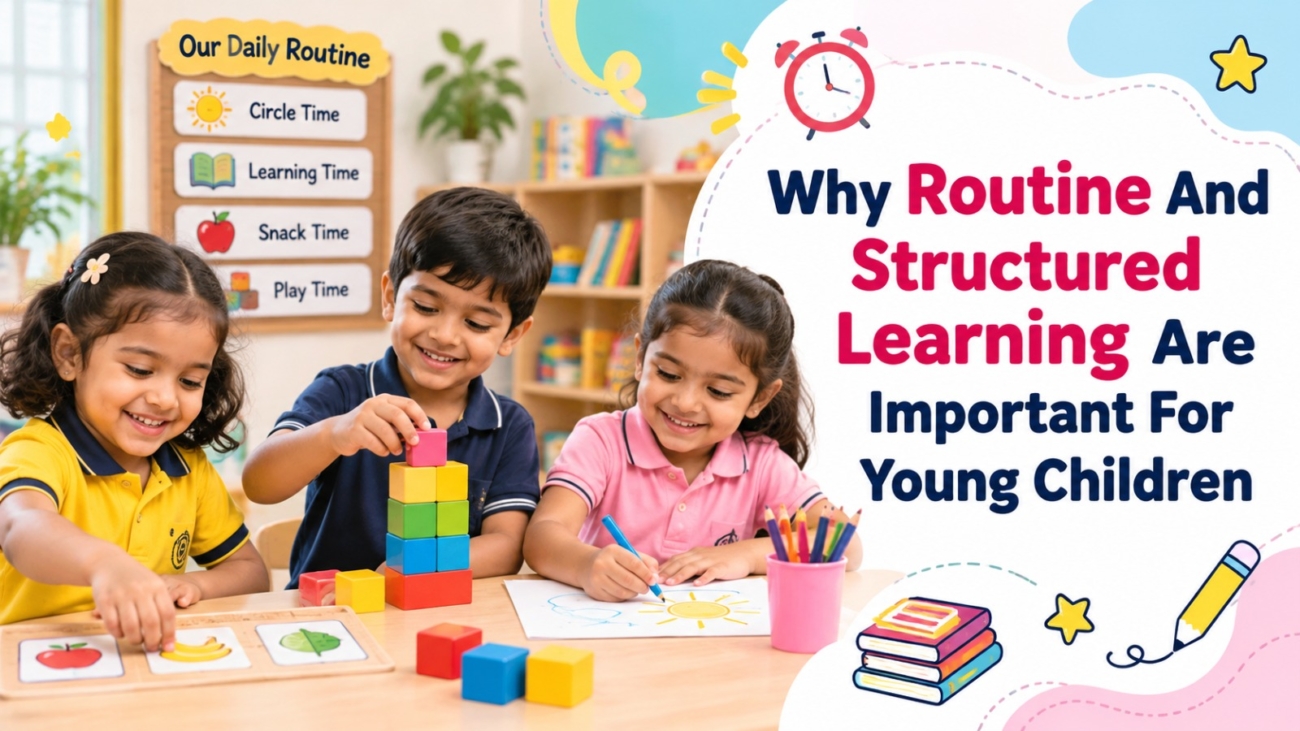
Have you ever noticed a 3-year-old child gleam with excitement when you offer a bedtime snack before story time? Try to reverse it by offering a sweet treat after bedtime. The same child’s disappointment is visible.
This is why routine and structured learning for children thoroughly improve brain development as opposed to doing things without a sense of direction.
Routine and structure therefore are pivotal elements in every child’s early development. However, these are often overlooked or underrated tools that people do not possess knowledge about.
In this blog, we highlight the importance of routine for preschoolers. We shall also take a deep dive into how structured learning for children enhances preschool childhood development considerably. Helping you get started here:
Importance Of Structure And Routine For Children
Let us have a quick rundown of pointers that highlight the importance of structure and routine for preschoolers. Helping you get started here:
1. Routines Help Children Feel Safe
Children are a bundle of energy. As adults, it is our responsibility to tap into the potential of that unlimited energy.
Here are simple guidelines you can use to achieve routines in your children
- Does your child play after school? Gently ask your child to put back their toys in place. Eventually, the habit of putting things back in their respective place becomes a routine.
- Ask what happened in school. Allow the child to communicate his/her feelings. This routine emphasizes honesty and transparency in children.
- Has your child finished a meal? Ask your child to put the plates into the sink. This routine emphasizes discipline and orderliness in life.
Predictable schedules promote emotional security and consistency in every child who is curious to learn and explore.
2. Structure Builds Independence and Confidence in Children
A structured learning pattern instils confidence and expertise in doing the same thing again and again. You develop creative instincts to do it when you perform the same activity again and again.
Here are simple guidelines on how to combine routine with structure among young children:
- When your child recites nursery rhymes at home, you can sing along and emote with your child. This elevates a sense of confidence in your child.
- Does your child want story time in bed? Yes, say the story. Ask your child which character he/she loves the most. You can both perform role-play at home. This structure translates into assuming positions or taking responsibilities in the child once he/she enters adulthood.
- At home, arrange objects like books or chalk pieces and allow your child to count the objects.
This way, you can include creative techniques while imparting structured learning at home, reinforcing confidence in your child.
3. Calmer Days And Fewer Tantrums
When you have a perfect routine, kids know what comes next and which activity comes after. Therefore, you find children preoccupied and engaged all the time.
Therefore, parents who emphasize routine and structure in their children showcase a better and more organized sense of upbringing.
Here are simple guidelines on how this can be achieved:
- Ask your child to put the bags back after school.
- Have a fun activity or plan a surprise hunt at home for a gift box you have bought for your child.
- Once the treasure hunt is over and your child gets the gift, encourage your child to say thank you.
- The routine is then followed with talking to your child, feeding a nice meal, and taking your child for a walk in the garden or nearby park at home. This routine teaches children that curriculum learning is accompanied by recreation and me-time.
4. Creation of Healthy Habits In Children
By introducing a structure at home, children inculcate the value of discipline and a sense of time management.
When you introduce activities, learning, and recreation, the tots and toddlers develop a better sense of time management, which can go a long way in helping them shape careers as successful adults too.
Simple guidelines to inculcate life values among your children:
- Teach kids the importance of brushing, flossing, and cleansing their teeth early in the morning.
- Introduce simple tidying habits by asking children to wash their faces after they return home from school.
- Provide simple guidelines on how your kids can use sanitizers after touching objects at home. This can prevent the spread of bacterial infections and inculcate cleanliness among your children.
Conclusion
A healthy routine followed by structured learning for children stimulates growth and thinking immensely among preschoolers. What are your thoughts on this?
About Us
Sristi Kids provides a creative and dynamic environment for early childhood learning and development. Built upon traditional values and partnering with learning communities, we bring to you excellence and empowerment in this fast-paced era, too.
Being a pioneer in Early Childhood Care & Education, or ECCE, we dedicate ourselves to promoting early child care and therefore tap the potential in every child.
With over a decade of experience in early child development, we have created a unique culture in growing metros and expanded our operations in suburban neighborhoods with respect to schooling for toddlers.
Through our community and learning development among young children, we pride ourselves on preserving our core values, which are self-reliance, peer interaction, and individual growth among young children.
Connect with us by logging in to our website at https://sristikids.com/. You can also get in touch with us on our mobile numbers, which are +91 9901048063 and +91 99022 71599, and our team shall be more than happy to guide you further.
Frequently Asked Questions (FAQs)
1. Do routine and structure amount to restriction or control?
Many people have a misconception that when a parent exercises a healthy routine and structure in young children, they are limiting the potential of the child to exercise freedom or do not promote a child’s creativity.
However, it does not work that way. A routine is not introduced to promote rigidity. It is to inculcate values of time management and consistency. When the child performs the same activity again and again, it becomes a regular pattern, and that stimulates habit formation among preschool children.
2. How do you inculcate routine or structure at home?
Here are simple ideas on how you can inculcate a routine or structure at home for your little children:
- Ask your child to wash his/her plate after every meal.
- Ask your child to put back their clothes, toys, or belongings where they were taken from.
- Encourage by clapping hands or hugging the child once a routine activity is completed.
Also read: A Parent’s Checklist for Evaluating Preschool Safety Standards